

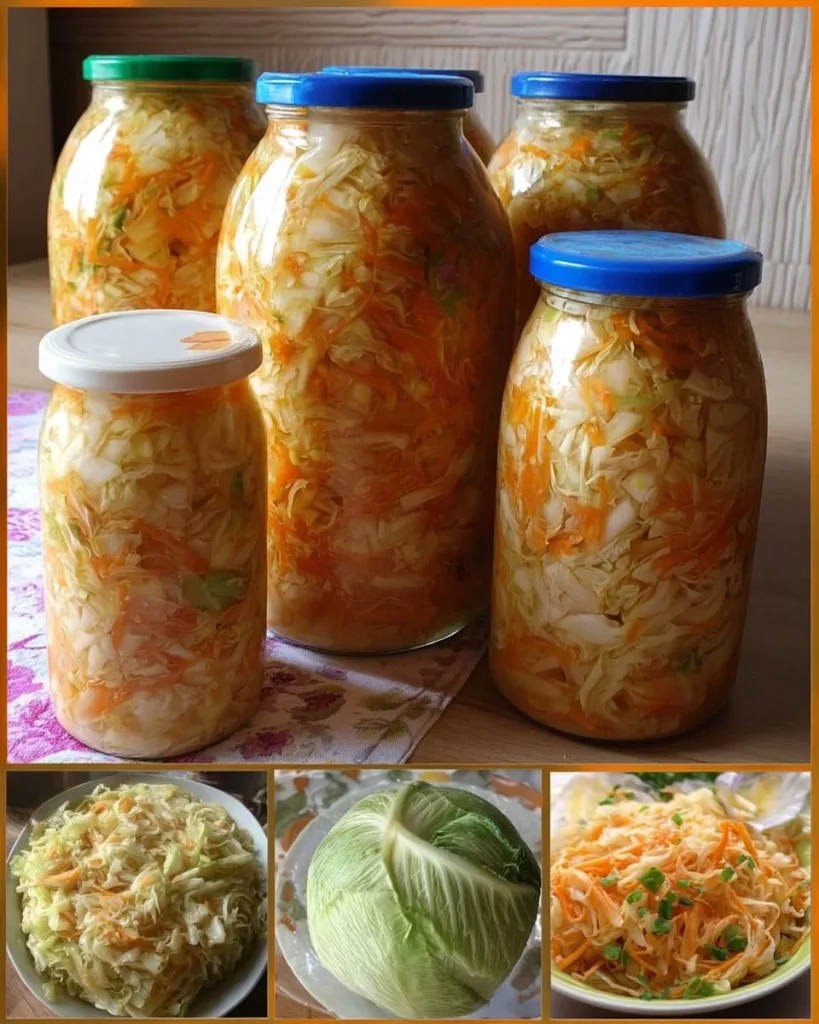
Fermented cabbage, also known as sauerkraut, is a delicious and nutritious dish that not only enhances the flavor of many recipes but also boasts numerous health benefits. This naturally fermented food is packed with probiotics, vitamins, and minerals, making it a fantastic addition to any diet. In this guide, we’ll walk you through how to prepare your very own fermented cabbage using simple ingredients and easy-to-follow steps.
Ingredients
- 3 kg of cabbage (approximately 6.6 lbs)
- 1.5 tablespoons of salt (about 25 g)
- 1 carrot (optional, grated or sliced)
Directions
- Choose late varieties of cabbage, ensuring they are white, plump, dense, sweet, and crunchy.
- If using, grate or slice the carrot.
- Combine the cabbage and optional carrot in a large bowl or fermenting vessel.
- Add 1.5 tablespoons of rock salt to the cabbage mixture.
- Tamp the mixture well to release air and cover it with its own juice. Do not cover it tightly; use gauze or a breathable lid.
- Keep the mixture warm (20 to 22 degrees Celsius or 68 to 72 degrees Fahrenheit) for the first 2 to 3 days to allow fermentation to start.
- During the first 3 days, pierce the cabbage with a clean utensil daily to release gas and prevent bitterness.
- After 3 days, move the jar to a cool place like a basement, refrigerator, or garage.
- Fermentation will take about 2 to 3 weeks before it’s ready to eat.
Prep Time: 15 minutes
Cook Time: 3 weeks (fermentation time)
Total Time: 3 weeks and 15 minutes
Servings: Approximately 15-20 servings
Nutrition Info (per serving): Calories: 20, Protein: 1g, Fat: 0g, Carbohydrates: 4g, Fiber: 2g
How to Serve
Fermented cabbage can be enjoyed in a variety of ways. Serve it as a side dish alongside meats or fish, or incorporate it into salads for an added crunch and tangy flavor. It’s also a great topping for sandwiches and tacos, providing a bright contrast to richer ingredients. For a simple snack, enjoy it straight from the jar with a fork. The versatility of fermented cabbage makes it a fantastic addition to any meal.
FAQs
1. How long can I store fermented cabbage?
Fermented cabbage can be stored in the refrigerator for several months. Just be sure to keep it in a sealed container to maintain freshness.
2. Is it necessary to use a specific type of salt?
While any non-iodized salt can work, rock salt or sea salt is preferred because it does not contain additives that can affect fermentation.
3. Can I add spices or herbs to my fermented cabbage?
Absolutely! Feel free to experiment with spices like caraway seeds, juniper berries, or even herbs to customize the flavor of your fermented cabbage.
Fermented Cabbage
A delicious and nutritious dish packed with probiotics, vitamins, and minerals, perfect for enhancing many recipes.
Main Ingredients
- 3 kg 3 kg of cabbage (Choose late varieties that are white, plump, dense, sweet, and crunchy.)
- 1.5 tablespoons 1.5 tablespoons of rock salt (Non-iodized salt is preferred; consider rock salt or sea salt for better fermentation.)
- 1 piece 1 carrot (optional) (Grated or sliced, can be added for additional flavor.)
Preparation
- Choose late varieties of cabbage ensuring they are white, plump, dense, sweet, and crunchy.
- If using, grate or slice the carrot.
- Combine the cabbage and optional carrot in a large bowl or fermenting vessel.
- Add 1.5 tablespoons of rock salt to the cabbage mixture.
- Tamp the mixture well to release air and cover it with its own juice. Do not cover it tightly; use gauze or a breathable lid.
Fermentation
- Keep the mixture warm (20 to 22 degrees Celsius or 68 to 72 degrees Fahrenheit) for the first 2 to 3 days to allow fermentation to start.
- During the first 3 days, pierce the cabbage with a clean utensil daily to release gas and prevent bitterness.
- After 3 days, move the jar to a cool place like a basement, refrigerator, or garage.
- Fermentation will take about 2 to 3 weeks before it’s ready to eat.
Fermented cabbage can be enjoyed as a side dish, salad ingredient, sandwich topping, or as a snack. It can be stored in the refrigerator for several months in a sealed container to maintain freshness. You can also add spices or herbs to customize flavors.